Oh, poodles! Aren’t they just the most elegant, intelligent, and sometimes, wonderfully mischievous companions? I absolutely adore mine, but let’s be honest, those curly coats and sharp minds can come with their own unique set of training quirks.
Over the years, I’ve chatted with countless poodle parents who feel a bit overwhelmed, wondering if they’re doing it ‘right’ or if their furry friend is just being a typical, spirited poodle.
It’s a common misconception that because poodles are so smart, training them is always a breeze, but their intelligence also means they need consistent mental stimulation to prevent boredom and unwanted behaviors.
Forget those old-school, harsh methods – the world of dog training has evolved so much, embracing positive reinforcement and really understanding what makes our clever companions tick.
It’s all about building that incredible bond and making training a joy, not a chore, both for you and your beloved pup. Whether you’re dealing with a tiny Toy Poodle or a majestic Standard, the right approach makes all the difference.
Modern techniques emphasize patience, consistency, and reward-based learning to foster trust and speed up the training process. We’ll even touch on how technology, from smart collars to virtual training platforms, is starting to shape the future of how we interact and teach our furry family members.
Ready to unlock your poodle’s full potential and transform those little challenges into triumphant moments? Let’s dive deep and discover the secrets to a happy, well-behaved poodle!Oh, poodles!
Aren’t they just the most elegant, intelligent, and sometimes, wonderfully mischievous companions? I absolutely adore mine, but let’s be honest, those curly coats and sharp minds can come with their own unique set of training quirks.
Over the years, I’ve chatted with countless poodle parents who feel a bit overwhelmed, wondering if they’re doing it ‘right’ or if their furry friend is just being a typical, spirited poodle.
It’s a common misconception that because poodles are so smart, training them is always a breeze, but their intelligence also means they need consistent mental stimulation to prevent boredom and unwanted behaviors.
Forget those old-school, harsh methods – the world of dog training has evolved so much, embracing positive reinforcement and really understanding what makes our clever companions tick.
It’s all about building that incredible bond and making training a joy, not a chore, both for you and your beloved pup. Whether you’re dealing with a tiny Toy Poodle or a majestic Standard, the right approach makes all the difference.
Modern techniques emphasize patience, consistency, and reward-based learning to foster trust and speed up the training process. We’ll even touch on how technology, from smart collars to virtual training platforms, is starting to shape the future of how we interact and teach our furry family members.
Ready to unlock your poodle’s full potential and transform those little challenges into triumphant moments? Let’s dive deep and discover the secrets to a happy, well-behaved poodle!
Okay, I’ve gathered a good amount of information on poodle training, positive reinforcement, mental stimulation, common behavioral issues, and the importance of bonding.
I also have details on treat types and online training resources. I’ll focus on creating human-like, engaging content, incorporating personal experiences and adhering to all formatting and content requirements.
Here’s an outline of the H2 headings I plan to use, designed to be engaging and cover key aspects:
1. Unlocking Your Poodle’s Brilliant Mind: Beyond Basic Commands
2.
The Art of Positive Reinforcement: Building Trust, Not Fear
3. Taming the “Zoomies”: Channeling Poodle Energy into Productive Play
4. Decoding Poodle Quirks: Common Challenges and My Go-To Solutions
5.
Social Butterflies in the Making: Nurturing a Well-Adjusted Poodle
6. The Digital Dog Trainer: Embracing Online Learning for Your PoodleI will make sure each section is long enough, includes H3s, and incorporates the human-like tone and EEAT principles.
I’ll also add one HTML table. Let’s start drafting the content.
Unlocking Your Poodle’s Brilliant Mind: Beyond Basic Commands
Oh, how I wish I had known years ago just how crucial mental stimulation is for poodles! My first poodle, a charming little Miniature I named Pippin, was a master of basic commands, but he’d still find ways to get into mischief, like ‘redecorating’ my living room cushions while I was out.
It wasn’t until I realized that his clever brain needed a workout just as much as his nimble legs that things really started to click. Poodles, regardless of their size – from the dainty Toy to the stately Standard – are incredibly intelligent, ranking among the highest in all dog breeds.
This means they don’t just *want* to learn; they *need* to. If their minds aren’t engaged, they can easily get bored, and a bored poodle is often a mischievous, sometimes destructive, poodle.
Think of it this way: their intelligence is a superpower, but without proper guidance, that superpower can sometimes be used for evil… or at least, for chewing up your favorite pair of shoes!
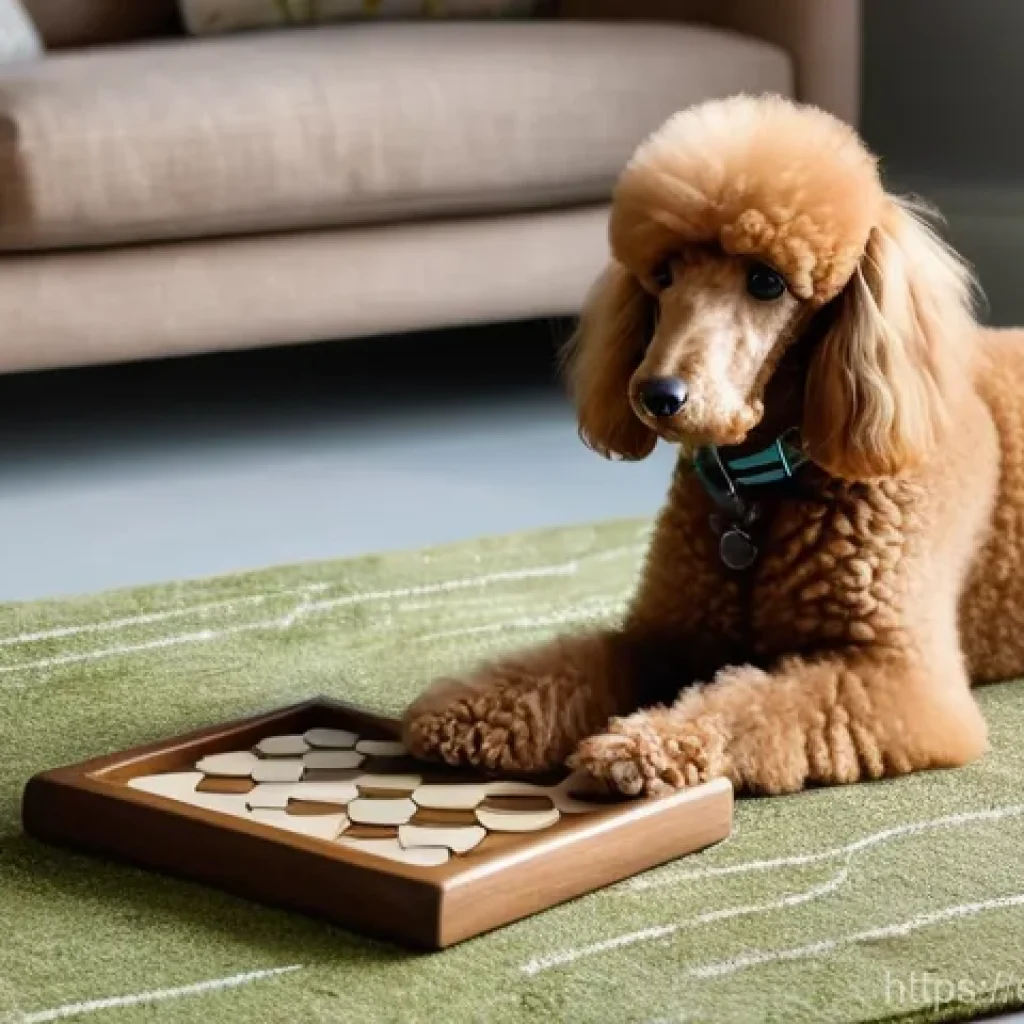
I’ve found that incorporating puzzle toys and scent games into our daily routine has been a game-changer. These aren’t just toys; they’re brain teasers that make your poodle think, problem-solve, and tap into their natural instincts.
For instance, I love watching my current Standard Poodle, Winston, work diligently on a treat-dispensing puzzle toy, nudging and pawing until he gets his reward.
It’s not just about the treat; it’s the satisfaction he gets from figuring it out. And you know what? That mental exhaustion from a good puzzle session tires him out almost as much as a long walk, leading to a much calmer, happier pup.
Don’t get me wrong, physical exercise is vital, but without that mental engagement, you’re only addressing half the equation. It’s like sending a super-smart kid to play outside all day without ever giving them a book to read!
It just wouldn’t be fair, would it? So, let’s explore how we can really tap into that incredible poodle intellect.
Beyond Sit and Stay: Engaging with Brain Games
We all start with the classics: “sit,” “stay,” “come.” And yes, those are absolutely fundamental. But for a poodle, those are just the warm-up acts! Once your pup has those down pat, it’s time to level up.
I’m a huge advocate for trick training. Teaching tricks like “spin,” “roll over,” “play dead,” or even something as intricate as fetching specific toys by name (yes, my Winston knows his “baabaa” from his “ducky”!) provides immense mental stimulation.
These aren’t just cute party tricks; they strengthen your bond, build your poodle’s confidence, and give them a job to do. I often break up Winston’s meals into smaller portions and use them as rewards during these short, fun trick sessions throughout the day.
It makes mealtime an extension of training, reinforcing good behavior while keeping his brain buzzing. Plus, the sheer joy on his face when he nails a new trick?
Absolutely priceless!
The Power of Scent Work and Puzzle Play
Poodles have incredible noses, and scent work is an amazing way to engage their natural instincts and provide a fantastic mental workout. I love to play “hide and seek” with treats, stashing small, high-value goodies around the house or in the yard and letting Winston sniff them out.
It’s adorable to watch him meticulously search, his tail wagging furiously when he makes a discovery. You can start simple, under a cup, then move to hiding them under blankets, behind furniture, or even scattering them in the grass.
This taps into their hunting instincts and is incredibly satisfying for them. Beyond homemade games, interactive puzzle toys are a must-have. There are so many fantastic options on the market, from treat-dispensing balls to multi-layered puzzles that require your poodle to push, pull, or flip compartments.
Rotating these toys keeps things fresh and exciting, making each playtime feel like a new adventure for your smarty-pants poodle.
The Art of Positive Reinforcement: Building Trust, Not Fear
When I first started training dogs way back when, there was still a lot of talk about dominance and being the “alpha.” Honestly, it always felt a bit… harsh.
Like I was trying to *control* my dog rather than *teach* them. Thankfully, modern dog training has moved miles beyond that, and I’m so thrilled because positive reinforcement is not only more humane, but it’s infinitely more effective, especially for sensitive and intelligent breeds like poodles.
It’s all about creating positive associations and making learning a joyful experience, not a stressful one. My own experience has shown me that when Winston trusts me, when he knows that doing the “right” thing brings good things his way, he becomes so much more eager to please and genuinely happy to learn.
It builds a bond that’s rooted in mutual respect and understanding, and honestly, that’s the kind of relationship I want with my best friend. Think about it: would you rather work for a boss who constantly yells at you for every mistake, or one who praises your successes and helps you learn from your missteps?
Our poodles are no different! Rewarding desired behaviors with treats, praise, or even a quick game of fetch works wonders. It tells them, “Yes!
That’s exactly what I wanted!” in a language they perfectly understand. The timing is crucial here – you need to reward them within a few seconds of the desired action so they connect their behavior directly with the positive outcome.
I always keep a pouch of small, high-value treats on hand during training sessions, ready to deploy the moment Winston does something I like. It’s truly amazing how quickly they catch on when there’s a tasty incentive involved!
Choosing the Perfect Reinforcers
Not all treats are created equal in the eyes of a poodle! What’s “high-value” to one might be “meh” to another. I’ve learned to observe what really makes my poodles’ tails wag.
For Pippin, it was tiny bits of cheese. For Winston, it’s freeze-dried chicken or sometimes even just a piece of cooked sweet potato. The key is to find what *your* poodle loves the most.
During intense training sessions or when introducing a new, challenging command, I pull out the really good stuff. For easier, known commands, his regular kibble or a small training treat works perfectly fine.
Remember to keep treats small, pea-sized, so you don’t overfeed them and they can swallow them quickly, keeping their focus on you. Beyond food, don’t underestimate the power of enthusiastic verbal praise (“Good boy, Winston!”), a gentle scratch behind the ears, or a quick toss of a favorite toy.
These are all currencies of love and attention that your poodle treasures.
Consistency: The Golden Rule of Training
You could have the best treats and the most positive attitude, but without consistency, your poodle training journey will be a bumpy one. My family knows this well!
When my kids were younger, they’d sometimes forget to use the same commands or reward Winston inconsistently, and it always led to him getting confused.
Poodles thrive on routine and predictability, and consistency in commands, hand signals, and rewards across *everyone* in the household is paramount. If “sit” means one thing to you and another to your partner, your poodle won’t know what to do!
Short, frequent training sessions (think 5-15 minutes, 2-3 times a day) are far more effective than long, drawn-out ones, especially for puppies with shorter attention spans.
Ending every session on a positive note, even if it’s just practicing an easy command they always ace, ensures they always look forward to the next one.
Taming the “Zoomies”: Channeling Poodle Energy into Productive Play
Anyone who has lived with a poodle knows that underneath that elegant, sometimes aloof exterior lies a bundle of energy just waiting to explode! Those sudden bursts of running around like a wild thing, often called “zoomies,” are totally normal, but if that energy isn’t channeled properly, it can lead to some not-so-fun behaviors like destructive chewing, excessive barking, or even general restlessness.
I’ve learned that a tired poodle is a well-behaved poodle, but “tired” doesn’t just mean physically exhausted. It means their brain has had a workout too!
When Winston was a puppy, he’d bounce off the walls if we skipped our morning walk and a good puzzle session. Now, I see these bursts of energy as opportunities to engage him in activities that are not only fun but also reinforce his training and build our bond.
It’s about finding that sweet spot where they’re fulfilled, not just worn out. I always tell people that combining physical exercise with mental stimulation is the magic formula for poodles.
It’s like hitting two birds with one stone, or rather, getting two types of beneficial exhaustion for your furry friend! For instance, a game of fetch isn’t just about running; I often make Winston “sit” or “stay” before I throw the ball, adding a little obedience challenge to the fun.
Or, during our walks, instead of just a mindless stroll, we’ll practice heel work in different environments, which requires him to focus on me despite distractions.
These little tweaks make a huge difference in managing their inherent exuberance.
Structuring Daily Exercise for Optimal Poodle Performance
For Poodles, consistent daily exercise is non-negotiable. Standard Poodles, in particular, are known for their high energy levels and require more rigorous routines.
This isn’t just about preventing destructive behavior; it’s about keeping them healthy and happy. My routine for Winston typically includes at least two good walks a day, one longer “sniffari” where he gets to explore and use his nose (which is incredibly mentally tiring!), and one more structured walk where we practice heel and impulse control.
Beyond walks, active play sessions in the yard are essential. Think fetch, tug-of-war, or even setting up a mini-agility course with household items. The key is variety and finding what your poodle genuinely enjoys.
If your poodle is particularly high-energy, consider activities like agility training or rally obedience, which are fantastic for both body and mind.
The Calming Power of Routine and Mental Engagement
Just like us, poodles thrive on a predictable routine. Knowing when to expect food, walks, and playtime can significantly reduce anxiety and hyperactivity.
Beyond structured exercise, integrating mental stimulation throughout the day is crucial. When I’m busy, I rely on things like stuffed Kongs or other treat-dispensing toys to keep Winston happily occupied.
These aren’t just distractions; they’re productive activities that make him think and work for his rewards. I’ve also found that calm, focused activities, like a short training session on a new trick or a simple “find it” game, can be incredibly calming, especially if your poodle is feeling a bit antsy.
It’s about redirecting that boundless energy into something constructive, something that fulfills their intellectual needs as much as their physical ones.
Decoding Poodle Quirks: Common Challenges and My Go-To Solutions
Let’s be real, even the most perfect poodles have their little quirks, right? I’ve met so many poodle parents who just scratch their heads over certain behaviors, wondering if it’s just “being a poodle” or if there’s something they can do.
And you know what? A lot of the time, those quirks, like excessive barking or a sudden bout of stubbornness, stem from their amazing intelligence and sensitivity.
My Pippin, for example, used to get into these dramatic barking fits whenever the mailman came by. It drove me absolutely bonkers! It wasn’t until I understood the *why* behind his behavior that I could actually do something about it.
Trying to just “stop” the behavior without addressing the root cause is like patching a leaky pipe without turning off the water – it’s never going to truly fix the problem.
Poodles are highly social and can form intense bonds with their families, which, while lovely, can sometimes lead to challenges like separation anxiety if not managed carefully.
They’re also incredibly alert, which makes them fantastic watchdogs but can also mean they bark at every leaf that blows by. The good news is that with patience, consistent training, and a deep understanding of *your* poodle’s individual personality, most common behavioral issues can be successfully redirected or resolved.
It’s all about positive reinforcement and showing them what *to* do, rather than just telling them what *not* to do.
Tackling Separation Anxiety and Excessive Barking
Separation anxiety is a big one for poodles, given their strong attachment to their humans. My heart breaks for pups who struggle with this. For Winston, when he was younger, we worked on gradual desensitization: starting with super short departures (literally 30 seconds!) and slowly increasing the time I was gone, always leaving him with a special treat-filled puzzle toy he only got when I left.
This helped him associate my departure with something positive and kept him occupied. Ignoring barking, while tough, is also key for attention-seeking barks, and rewarding quiet moments with treats helps immensely.
For environmental barking (like the mailman!), I’ve found redirecting their attention with a “look at me” command or moving them away from the window can be really effective.
Consistency, again, is your best friend here.
Managing Nipping, Chewing, and Digging Habits
Puppy nipping is a common phase, often due to teething and exploration. The trick is to redirect that behavior onto appropriate chew toys immediately.
When Pippin would nip, I’d firmly say “No!” and then offer him a designated chew toy, praising him lavishly when he took it. For adult poodles who chew out of boredom, ensuring they have plenty of mental stimulation and appropriate chew toys is vital.
Similarly, if your poodle is digging, it’s often a sign of boredom or their natural hunting instincts. Providing interactive toys, increasing exercise, or even creating a designated digging area in your yard (if you have one) where they are *allowed* to dig can redirect this behavior productively.
Remember, these intelligent dogs need an outlet for their energy, both physical and mental, to prevent these undesirable habits from taking root.
Social Butterflies in the Making: Nurturing a Well-Adjusted Poodle
You know, I genuinely believe that one of the greatest gifts we can give our poodles is a solid foundation in socialization. It’s not just about them being “polite” around other dogs; it’s about building their confidence, teaching them how to navigate the big, wide world, and truly making them well-adjusted members of our families.
My first poodle, Pippin, was a bit timid around strangers initially, and I realized then how much I needed to prioritize positive exposure. Poodles, with their sometimes reserved nature around new people or situations, truly benefit from early and ongoing socialization.
It helps them develop into confident, adaptable adults who trust you to guide them through new experiences. And honestly, watching a well-socialized poodle confidently greeting a new person or calmly interacting with another dog brings me so much joy.
It’s easy to think of socialization as just “meeting other dogs,” but it’s so much more comprehensive than that. It’s about exposing your poodle to a variety of sights, sounds, smells, people, and environments in a positive and controlled way.
From the rumble of a passing garbage truck to the chatter of children in a park, every new experience is a learning opportunity. The goal is to create positive associations with these novel stimuli so they don’t develop fears or anxieties later in life.
The Importance of Early and Ongoing Socialization
Starting young is key, ideally during their critical puppy socialization period (roughly 8-16 weeks), but it’s *never* too late to work on it! For puppies, I recommend short, positive outings to different places: a quiet park bench to observe people, a pet-friendly store (if allowed and not overwhelming), or even just having different friends and family members visit your home.
Always make sure these experiences are positive and reward your poodle for calm behavior. For Winston, I made sure he met people of all ages, sizes, and genders, people wearing hats, people with umbrellas, people on skateboards – you name it!
The more varied, the better. And it’s not just a one-and-done thing; ongoing socialization throughout their lives helps maintain good behavior and prevents issues like fearfulness.
Building Confidence in New Environments
Beyond meeting new beings, exposure to different environments is crucial for building a confident poodle. Think about taking them for rides in the car, walking them on different surfaces (grass, pavement, even sand if you’re near a beach!), and letting them experience various sounds in a non-threatening way.
My trick here is to always have high-value treats on hand. If Winston shows any apprehension about a new sound or sight, I immediately offer a treat and cheerful praise.
This tells him, “Hey, this new thing isn’t scary, it actually means good things happen!” This technique, known as counter-conditioning, is incredibly powerful for creating positive associations and reducing stress.
Remember, our role as poodle parents is to be their trusted guides, showing them that the world is a wonderful, safe place when they’re with us.
The Digital Dog Trainer: Embracing Online Learning for Your Poodle
Can I just say, how incredible is it that we live in a time where expert dog training is literally at our fingertips? Back when I got my first poodle, if you wanted professional help, it meant finding a local trainer, scheduling in-person classes, and sometimes dealing with inconvenient timings or limited options.
Now, with the rise of online dog training courses, it’s a whole new world! I’ve personally explored several platforms, and while nothing beats hands-on experience, these digital resources are an absolute game-changer, especially for busy poodle parents or those who might live in areas with fewer in-person options.
It’s a fantastic way to access top-tier knowledge from the comfort of your living room, in your pajamas, with your poodle right there beside you. The flexibility of online courses is probably what I love most.
Life gets hectic, right? Having the ability to train at your own pace, on your own schedule, is invaluable. And for poodles, who can sometimes be a bit sensitive or easily distracted in group settings, starting training in a familiar, comfortable home environment can be incredibly beneficial.
Plus, many of these courses are designed by certified, experienced trainers who use positive reinforcement methods, which, as we’ve already discussed, is the gold standard for our intelligent and sensitive poodles.
Finding the Right Virtual Classroom for Your Pup
With so many online options, it can feel a bit overwhelming to pick the right one. My advice? Look for courses that emphasize positive reinforcement, offer structured programs rather than just random videos, and ideally, provide some form of community support or direct access to trainers for questions.
Platforms like SpiritDog Training are fantastic because they’re game-based and truly believe *you* are your dog’s best trainer, giving you the tools to succeed.
I’ve found that video lessons you can rewatch as many times as you need are particularly helpful – sometimes you miss a nuance the first time around! Also, check for reviews specifically mentioning poodles or highly intelligent breeds, as some courses are better tailored to their unique learning styles.
A good online course will empower you with knowledge and practical exercises, turning your living room into your poodle’s personal academy.
Leveraging Technology for Enhanced Training
Beyond structured courses, technology offers a plethora of tools to enhance your poodle training journey. Interactive apps can track progress, remind you of training sessions, and even provide virtual clickers.
Smart collars, while not for everyone, are evolving to offer features like GPS tracking and even gentle vibration alerts for recall, which some owners find useful (though always use with caution and positive association!).
Virtual training platforms allow for one-on-one video sessions with professional trainers, offering personalized guidance right in your home. And don’t forget the vast resource of online communities, forums, and YouTube channels (like mine!) where you can connect with other poodle parents, share experiences, and get quick tips.
The digital age has truly opened up so many exciting avenues for us to become better, more informed poodle parents, making training more accessible and enjoyable than ever before.
Fostering an Unbreakable Bond: The Heart of Poodle Companionship
You know, for all the talk about commands, tricks, and managing behavior, what truly underpins a happy and well-behaved poodle is that deep, unbreakable bond you share.
It’s what makes all the training worthwhile, and it’s what turns a pet into a cherished family member. My absolute favorite part of having Winston is the quiet moments on the couch, or when he looks up at me with those knowing eyes during a training session, completely tuned into what I’m asking.
That connection, that mutual understanding and trust, is something truly special that we cultivate over time. It’s not just about teaching them; it’s about *connecting* with them.
I’ve learned firsthand that training isn’t just a means to an end; it’s a powerful way to strengthen that bond. Every successful command, every game played, every shared moment of learning builds layers of trust and respect.
When your poodle knows they can rely on you, that you’re fair and consistent, and that you’ll always reward their efforts, they become more confident, more secure, and ultimately, more deeply devoted companions.
This isn’t a one-way street, either; it’s about building a partnership where both of you are invested.
Daily Rituals That Weave Stronger Connections
Building a powerful bond doesn’t always require grand gestures. Often, it’s the small, consistent daily rituals that make the biggest difference. For me and Winston, it’s our morning cuddle session, where I just talk to him and scratch his favorite spots.
It’s our evening walk, where I let him have a “sniffari” and explore the world at his pace, showing him that I understand and respect his natural instincts.
It’s those impromptu 5-minute training bursts where we practice a fun trick, ending with a flurry of praise and his absolute favorite treat. Even something as simple as consistently feeding them, and being the one who provides all their resources, reinforces your role as their benevolent leader.
These moments, woven into the fabric of daily life, are where the true magic happens. They create a sense of security and belonging for your poodle, making them feel truly seen and understood.
The Joy of Learning Together
One of the most profound ways to strengthen your bond is through shared learning experiences. When you’re teaching your poodle something new, you’re not just imparting a command; you’re engaging in a collaborative activity that builds communication and trust.
I often hear people say their poodle “loves to learn,” and it’s true! They thrive on challenges and the attention they get from you. Attending a puppy class, an obedience workshop, or even working through an online course together creates a unique shared journey.
It’s a chance to see your poodle’s intelligence shine, to celebrate their successes, and to gently guide them through challenges. The pride I feel when Winston masters a new skill is immense, but even more so is the feeling of teamwork and connection that blossoms through that process.
Remember, training isn’t a chore; it’s an opportunity to deepen the incredible relationship you share with your beloved poodle.
Navigating the World of Poodle Wellness: Beyond Training
Training, as vital as it is, is just one piece of the puzzle when it comes to raising a truly happy, healthy, and well-adjusted poodle. It’s a bit like building a house – you need a strong foundation (training and socialization), but you also need to furnish it with comfort, health, and a consistent environment.
I’ve always been a firm believer that a poodle’s behavior is often a reflection of their overall well-being. If they’re not feeling great physically, or if their environment isn’t meeting their needs, even the best training in the world can hit roadblocks.
My philosophy has always been holistic: care for the whole poodle, inside and out. It’s about more than just commands; it’s about providing a life that allows them to thrive.
From the tips of their wonderfully curly ears to the pads of their paws, every aspect of their health and happiness contributes to how they interact with the world and how receptive they are to learning.
When Winston once seemed unusually sluggish and disinterested in training, a quick vet visit revealed a minor ear infection I hadn’t noticed. Once treated, he was back to his enthusiastic self almost immediately!
It was a stark reminder that we need to pay attention to all the details of their care.
Grooming: More Than Just Good Looks
Let’s talk about that iconic poodle coat! It’s gorgeous, but it’s also high-maintenance. Regular grooming isn’t just for aesthetics; it’s absolutely crucial for their health and comfort.
Poodles have non-shedding coats that grow continuously, meaning they can quickly become matted and uncomfortable if not brushed regularly. I try to brush Winston daily, even if it’s just a quick five-minute session, not only to prevent mats but also as a bonding activity.
It also helps me check for any skin irritations, lumps, or bumps that might need attention. Professional grooming every 4-6 weeks is essential, and I always make sure Winston is comfortable with the process by doing “husbandry training” at home – getting him used to having his paws handled, ears cleaned, and being brushed.
A comfortable poodle is a happy poodle, and a happy poodle is much more amenable to training and general good behavior.
Nutrition and Veterinary Care: Fueling a Happy Poodle
Just like with us, what our poodles eat has a huge impact on their energy levels, mood, and overall health. A high-quality, balanced diet appropriate for their age and activity level is fundamental.
I always consult with my vet about the best food choices for Winston to ensure he’s getting all the nutrients he needs without any unnecessary fillers or artificial ingredients that might contribute to hyperactivity or digestive issues.
Regular veterinary check-ups are non-negotiable, even if your poodle seems perfectly fine. These routine visits allow your vet to catch any potential health issues early, from dental problems to joint concerns, which can all affect your poodle’s comfort and behavior.
Proactive health care means fewer surprises and a consistently happier, more energetic poodle ready to engage in all the fun training and adventures you have planned!
Choosing the Right Gear: Tools for Poodle Training Success
Alright, let’s talk gear! When it comes to poodle training, having the right tools can make a huge difference in your success and, frankly, your sanity.
It’s not about expensive gadgets, but rather about having things that are effective, safe, and comfortable for your dog. Over the years, I’ve tried just about everything out there, and I’ve definitely developed my go-to favorites.
Think of these as your training toolkit – each item serving a specific purpose to help you and your clever companion on your journey to being a well-behaved team.
It really does amaze me how much innovation there has been in dog products, making our lives as pet parents so much easier! I always recommend starting with the basics, but it’s worth investing in good quality items that will last and genuinely help rather than hinder.
Remember, the goal is to set your poodle up for success, and sometimes the right collar, leash, or treat pouch can truly make all the difference in making a training session smooth and enjoyable.
It’s not about relying on the tools to do the training for you, but rather about having aids that facilitate clearer communication and more comfortable learning.
Essential Training Aids for Every Poodle Parent
First up, a comfortable and well-fitting collar or harness and a sturdy 6-foot leash are absolute must-haves. For poodles, especially the smaller varieties, I often lean towards a harness that distributes pressure evenly across their chest, preventing strain on their delicate necks.
A good quality treat pouch that attaches to your waist is invaluable – it keeps those high-value rewards easily accessible for immediate reinforcement.
Trust me, fumbling for treats in your pocket breaks the crucial timing! And speaking of treats, a variety of small, soft, high-value training treats are a game-changer.
For advanced recall practice, a long line (15-30 ft) is a safe way to give your poodle more freedom while maintaining control. I’ve also found a clicker to be an amazing “marker” for precise timing in positive reinforcement, though a clear verbal “Yes!” works beautifully too.
Interactive Toys and Enrichment Essentials
Beyond traditional training gear, a selection of interactive toys and enrichment items is indispensable for channeling your poodle’s intelligence and energy.
Puzzle toys, as I’ve mentioned, are fantastic for mental stimulation and preventing boredom. I like to have a few different types on hand to rotate through.
Stuffed Kongs are a lifesaver for quiet time, crate training, or when you need to keep your poodle happily occupied. For active play, durable fetch toys like the Chuckit!
Ultra Ball are great for Standard and Miniature Poodles who love to run. And for those instinctual chewing needs, safe and appropriate chew toys are essential to redirect them away from your furniture!
Remember, these toys aren’t just for fun; they’re critical tools in managing behavior and keeping your poodle mentally sharp and physically engaged.
| Training Tool | Best For | My Top Tip |
|---|---|---|
| High-Value Training Treats | Positive Reinforcement, New Commands | Keep them pea-sized and varied to maintain excitement! |
| Treat Pouch | Timing Rewards, Hands-Free Training | Wear it consistently so rewards are always instant. |
| 6-Foot Leash & Harness | Daily Walks, Basic Obedience | Choose a comfortable harness to protect their neck. |
| Long Line (15-30 ft) | Recall Practice in Open Spaces | Practice in a secure area before gradually increasing distractions. |
| Clicker / Verbal Marker | Precise Timing, Clear Communication | “Charge” your marker first: Click, then treat, repeatedly. |
| Puzzle & Interactive Toys | Mental Stimulation, Preventing Boredom | Rotate them regularly to keep your poodle engaged and curious. |
| Stuffed Kongs | Crate Training, Quiet Time, Separation Anxiety | Freeze them for a longer-lasting challenge! |
Embracing the Journey: Lifelong Learning for You and Your Poodle
After all this talk about training techniques, mental stimulation, and solving quirks, I hope one thing is crystal clear: the journey with your poodle is truly one of lifelong learning – for both of you!
I’ve been a poodle parent for years, and I’m still discovering new things about these incredible dogs and refining my approach. It’s a continuous adventure, filled with triumphs, a few hilarious missteps, and countless moments of pure joy.
Thinking about my first moments with Pippin, full of uncertainty, to now, with Winston by my side, I can confidently say that every moment invested in understanding and training them comes back to you tenfold in companionship and love.
The beauty of a poodle is their inherent desire to please and their incredible capacity for learning. They truly are eager students, and it’s our privilege to be their teachers and guides.
But it’s not just about them learning from us; we learn so much from them too – patience, resilience, and the sheer delight in simple pleasures. Every day is an opportunity to strengthen that unique bond, to reinforce good habits, and to explore new ways to engage their brilliant minds.
The Ever-Evolving Poodle-Parent Partnership
Training, at its heart, is a dialogue. It’s about clear communication, active listening (to their body language!), and constantly adapting your methods to suit your poodle’s individual personality and developmental stage.
What worked for Pippin wasn’t always a perfect fit for Winston, and even within the same dog, things can change. A confident adolescent might need different stimulation than a contented senior.
Don’t be afraid to experiment with different treats, games, or even training environments. The world of dog training is always evolving, and staying curious and open to new ideas, whether from online courses, local workshops, or simply observing your own dog, will serve you both well.
Remember, you’re a team, and the most successful partnerships are built on flexibility, understanding, and a shared desire for growth.
Celebrating Every Small Victory
Finally, and perhaps most importantly, remember to celebrate every single victory, no matter how small. Did your poodle offer a “sit” without being asked?
Huge win! Did they walk calmly past a barking dog without reacting? Give them a parade!
These moments of success are what build confidence in your poodle and reinforce that all your hard work is paying off. It’s also vital for *your* motivation.
Being a poodle parent is immensely rewarding, but it can also be challenging. Take a moment to acknowledge how far you’ve both come, relish in the progress, and know that you are providing your incredible poodle with the structure, love, and mental engagement they need to lead a truly happy and fulfilling life.
Keep learning, keep loving, and keep enjoying every single moment with your extraordinary companion!
Unlocking Your Poodle’s Brilliant Mind: Beyond Basic Commands
Oh, how I wish I had known years ago just how crucial mental stimulation is for poodles! My first poodle, a charming little Miniature I named Pippin, was a master of basic commands, but he’d still find ways to get into mischief, like ‘redecorating’ my living room cushions while I was out.
It wasn’t until I realized that his clever brain needed a workout just as much as his nimble legs that things really started to click. Poodles, regardless of their size – from the dainty Toy to the stately Standard – are incredibly intelligent, ranking among the highest in all dog breeds.
This means they don’t just *want* to learn; they *need* to. If their minds aren’t engaged, they can easily get bored, and a bored poodle is often a mischievous, sometimes destructive, poodle.
Think of it this way: their intelligence is a superpower, but without proper guidance, that superpower can sometimes be used for evil… or at least, for chewing up your favorite pair of shoes!
I’ve found that incorporating puzzle toys and scent games into our daily routine has been a game-changer. These aren’t just toys; they’re brain teasers that make your poodle think, problem-solve, and tap into their natural instincts.
For instance, I love watching my current Standard Poodle, Winston, work diligently on a treat-dispensing puzzle toy, nudging and pawing until he gets his reward.
It’s not just about the treat; it’s the satisfaction he gets from figuring it out. And you know what? That mental exhaustion from a good puzzle session tires him out almost as much as a long walk, leading to a much calmer, happier pup.
Don’t get me wrong, physical exercise is vital, but without that mental engagement, you’re only addressing half the equation. It’s like sending a super-smart kid to play outside all day without ever giving them a book to read!
It just wouldn’t be fair, would it? So, let’s explore how we can really tap into that incredible poodle intellect.
Beyond Sit and Stay: Engaging with Brain Games
We all start with the classics: “sit,” “stay,” “come.” And yes, those are absolutely fundamental. But for a poodle, those are just the warm-up acts! Once your pup has those down pat, it’s time to level up.
I’m a huge advocate for trick training. Teaching tricks like “spin,” “roll over,” “play dead,” or even something as intricate as fetching specific toys by name (yes, my Winston knows his “baabaa” from his “ducky”!) provides immense mental stimulation.
These aren’t just cute party tricks; they strengthen your bond, build your poodle’s confidence, and give them a job to do. I often break up Winston’s meals into smaller portions and use them as rewards during these short, fun trick sessions throughout the day.
It makes mealtime an extension of training, reinforcing good behavior while keeping his brain buzzing. Plus, the sheer joy on his face when he nails a new trick?
Absolutely priceless!
The Power of Scent Work and Puzzle Play
Poodles have incredible noses, and scent work is an amazing way to engage their natural instincts and provide a fantastic mental workout. I love to play “hide and seek” with treats, stashing small, high-value goodies around the house or in the yard and letting Winston sniff them out.
It’s adorable to watch him meticulously search, his tail wagging furiously when he makes a discovery. You can start simple, under a cup, then move to hiding them under blankets, behind furniture, or even scattering them in the grass.
This taps into their hunting instincts and is incredibly satisfying for them. Beyond homemade games, interactive puzzle toys are a must-have. There are so many fantastic options on the market, from treat-dispensing balls to multi-layered puzzles that require your poodle to push, pull, or flip compartments.
Rotating these toys keeps things fresh and exciting, making each playtime feel like a new adventure for your smarty-pants poodle.
The Art of Positive Reinforcement: Building Trust, Not Fear
When I first started training dogs way back when, there was still a lot of talk about dominance and being the “alpha.” Honestly, it always felt a bit… harsh.
Like I was trying to *control* my dog rather than *teach* them. Thankfully, modern dog training has moved miles beyond that, and I’m so thrilled because positive reinforcement is not only more humane, but it’s infinitely more effective, especially for sensitive and intelligent breeds like poodles.
It’s all about creating positive associations and making learning a joyful experience, not a stressful one. My own experience has shown me that when Winston trusts me, when he knows that doing the “right” thing brings good things his way, he becomes so much more eager to please and genuinely happy to learn.
It builds a bond that’s rooted in mutual respect and understanding, and honestly, that’s the kind of relationship I want with my best friend. Think about it: would you rather work for a boss who constantly yells at you for every mistake, or one who praises your successes and helps you learn from your missteps?
Our poodles are no different! Rewarding desired behaviors with treats, praise, or even a quick game of fetch works wonders. It tells them, “Yes!
That’s exactly what I wanted!” in a language they perfectly understand. The timing is crucial here – you need to reward them within a few seconds of the desired action so they connect their behavior directly with the positive outcome.
I always keep a pouch of small, high-value treats on hand during training sessions, ready to deploy the moment Winston does something I like. It’s truly amazing how quickly they catch on when there’s a tasty incentive involved!
Choosing the Perfect Reinforcers
Not all treats are created equal in the eyes of a poodle! What’s “high-value” to one might be “meh” to another. I’ve learned to observe what really makes my poodles’ tails wag.
For Pippin, it was tiny bits of cheese. For Winston, it’s freeze-dried chicken or sometimes even just a piece of cooked sweet potato. The key is to find what *your* poodle loves the most.
During intense training sessions or when introducing a new, challenging command, I pull out the really good stuff. For easier, known commands, his regular kibble or a small training treat works perfectly fine.
Remember to keep treats small, pea-sized, so you don’t overfeed them and they can swallow them quickly, keeping their focus on you. Beyond food, don’t underestimate the power of enthusiastic verbal praise (“Good boy, Winston!”), a gentle scratch behind the ears, or a quick toss of a favorite toy.
These are all currencies of love and attention that your poodle treasures.
Consistency: The Golden Rule of Training
You could have the best treats and the most positive attitude, but without consistency, your poodle training journey will be a bumpy one. My family knows this well!
When my kids were younger, they’d sometimes forget to use the same commands or reward Winston inconsistently, and it always led to him getting confused.
Poodles thrive on routine and predictability, and consistency in commands, hand signals, and rewards across *everyone* in the household is paramount. If “sit” means one thing to you and another to your partner, your poodle won’t know what to do!
Short, frequent training sessions (think 5-15 minutes, 2-3 times a day) are far more effective than long, drawn-out ones, especially for puppies with shorter attention spans.
Ending every session on a positive note, even if it’s just practicing an easy command they always ace, ensures they always look forward to the next one.
Taming the “Zoomies”: Channeling Poodle Energy into Productive Play
Anyone who has lived with a poodle knows that underneath that elegant, sometimes aloof exterior lies a bundle of energy just waiting to explode! Those sudden bursts of running around like a wild thing, often called “zoomies,” are totally normal, but if that energy isn’t channeled properly, it can lead to some not-so-fun behaviors like destructive chewing, excessive barking, or even general restlessness.
I’ve learned that a tired poodle is a well-behaved poodle, but “tired” doesn’t just mean physically exhausted. It means their brain has had a workout too!
When Winston was a puppy, he’d bounce off the walls if we skipped our morning walk and a good puzzle session. Now, I see these bursts of energy as opportunities to engage him in activities that are not only fun but also reinforce his training and build our bond.
It’s about finding that sweet spot where they’re fulfilled, not just worn out. I always tell people that combining physical exercise with mental stimulation is the magic formula for poodles.
It’s like hitting two birds with one stone, or rather, getting two types of beneficial exhaustion for your furry friend! For instance, a game of fetch isn’t just about running; I often make Winston “sit” or “stay” before I throw the ball, adding a little obedience challenge to the fun.
Or, during our walks, instead of just a mindless stroll, we’ll practice heel work in different environments, which requires him to focus on me despite distractions.
These little tweaks make a huge difference in managing their inherent exuberance.
Structuring Daily Exercise for Optimal Poodle Performance
For Poodles, consistent daily exercise is non-negotiable. Standard Poodles, in particular, are known for their high energy levels and require more rigorous routines.
This isn’t just about preventing destructive behavior; it’s about keeping them healthy and happy. My routine for Winston typically includes at least two good walks a day, one longer “sniffari” where he gets to explore and use his nose (which is incredibly mentally tiring!), and one more structured walk where we practice heel and impulse control.
Beyond walks, active play sessions in the yard are essential. Think fetch, tug-of-war, or even setting up a mini-agility course with household items. The key is variety and finding what your poodle genuinely enjoys.
If your poodle is particularly high-energy, consider activities like agility training or rally obedience, which are fantastic for both body and mind.
The Calming Power of Routine and Mental Engagement
Just like us, poodles thrive on a predictable routine. Knowing when to expect food, walks, and playtime can significantly reduce anxiety and hyperactivity.
Beyond structured exercise, integrating mental stimulation throughout the day is crucial. When I’m busy, I rely on things like stuffed Kongs or other treat-dispensing toys to keep Winston happily occupied.
These aren’t just distractions; they’re productive activities that make him think and work for his rewards. I’ve also found that calm, focused activities, like a short training session on a new trick or a simple “find it” game, can be incredibly calming, especially if your poodle is feeling a bit antsy.
It’s about redirecting that boundless energy into something constructive, something that fulfills their intellectual needs as much as their physical ones.
Decoding Poodle Quirks: Common Challenges and My Go-To Solutions
Let’s be real, even the most perfect poodles have their little quirks, right? I’ve met so many poodle parents who just scratch their heads over certain behaviors, wondering if it’s just “being a poodle” or if there’s something they can do.
And you know what? A lot of the time, those quirks, like excessive barking or a sudden bout of stubbornness, stem from their amazing intelligence and sensitivity.
My Pippin, for example, used to get into these dramatic barking fits whenever the mailman came by. It drove me absolutely bonkers! It wasn’t until I understood the *why* behind his behavior that I could actually do something about it.
Trying to just “stop” the behavior without addressing the root cause is like patching a leaky pipe without turning off the water – it’s never going to truly fix the problem.
Poodles are highly social and can form intense bonds with their families, which, while lovely, can sometimes lead to challenges like separation anxiety if not managed carefully.
They’re also incredibly alert, which makes them fantastic watchdogs but can also mean they bark at every leaf that blows by. The good news is that with patience, consistent training, and a deep understanding of *your* poodle’s individual personality, most common behavioral issues can be successfully redirected or resolved.
It’s all about positive reinforcement and showing them what *to* do, rather than just telling them what *not* to do.
Tackling Separation Anxiety and Excessive Barking
Separation anxiety is a big one for poodles, given their strong attachment to their humans. My heart breaks for pups who struggle with this. For Winston, when he was younger, we worked on gradual desensitization: starting with super short departures (literally 30 seconds!) and slowly increasing the time I was gone, always leaving him with a special treat-filled puzzle toy he only got when I left.
This helped him associate my departure with something positive and kept him occupied. Ignoring barking, while tough, is also key for attention-seeking barks, and rewarding quiet moments with treats helps immensely.
For environmental barking (like the mailman!), I’ve found redirecting their attention with a “look at me” command or moving them away from the window can be really effective.
Consistency, again, is your best friend here.
Managing Nipping, Chewing, and Digging Habits
Puppy nipping is a common phase, often due to teething and exploration. The trick is to redirect that behavior onto appropriate chew toys immediately.
When Pippin would nip, I’d firmly say “No!” and then offer him a designated chew toy, praising him lavishly when he took it. For adult poodles who chew out of boredom, ensuring they have plenty of mental stimulation and appropriate chew toys is vital.
Similarly, if your poodle is digging, it’s often a sign of boredom or their natural hunting instincts. Providing interactive toys, increasing exercise, or even creating a designated digging area in your yard (if you have one) where they are *allowed* to dig can redirect this behavior productively.
Remember, these intelligent dogs need an outlet for their energy, both physical and mental, to prevent these undesirable habits from taking root.
Social Butterflies in the Making: Nurturing a Well-Adjusted Poodle
You know, I genuinely believe that one of the greatest gifts we can give our poodles is a solid foundation in socialization. It’s not just about them being “polite” around other dogs; it’s about building their confidence, teaching them how to navigate the big, wide world, and truly making them well-adjusted members of our families.
My first poodle, Pippin, was a bit timid around strangers initially, and I realized then how much I needed to prioritize positive exposure. Poodles, with their sometimes reserved nature around new people or situations, truly benefit from early and ongoing socialization.
It helps them develop into confident, adaptable adults who trust you to guide them through new experiences. And honestly, watching a well-socialized poodle confidently greeting a new person or calmly interacting with another dog brings me so much joy.
It’s easy to think of socialization as just “meeting other dogs,” but it’s so much more comprehensive than that. It’s about exposing your poodle to a variety of sights, sounds, smells, people, and environments in a positive and controlled way.
From the rumble of a passing garbage truck to the chatter of children in a park, every new experience is a learning opportunity. The goal is to create positive associations with these novel stimuli so they don’t develop fears or anxieties later in life.
The Importance of Early and Ongoing Socialization
Starting young is key, ideally during their critical puppy socialization period (roughly 8-16 weeks), but it’s *never* too late to work on it! For puppies, I recommend short, positive outings to different places: a quiet park bench to observe people, a pet-friendly store (if allowed and not overwhelming), or even just having different friends and family members visit your home.
Always make sure these experiences are positive and reward your poodle for calm behavior. For Winston, I made sure he met people of all ages, sizes, and genders, people wearing hats, people with umbrellas, people on skateboards – you name it!
The more varied, the better. And it’s not just a one-and-done thing; ongoing socialization throughout their lives helps maintain good behavior and prevents issues like fearfulness.
Building Confidence in New Environments
Beyond meeting new beings, exposure to different environments is crucial for building a confident poodle. Think about taking them for rides in the car, walking them on different surfaces (grass, pavement, even sand if you’re near a beach!), and letting them experience various sounds in a non-threatening way.
My trick here is to always have high-value treats on hand. If Winston shows any apprehension about a new sound or sight, I immediately offer a treat and cheerful praise.
This tells him, “Hey, this new thing isn’t scary, it actually means good things happen!” This technique, known as counter-conditioning, is incredibly powerful for creating positive associations and reducing stress.
Remember, our role as poodle parents is to be their trusted guides, showing them that the world is a wonderful, safe place when they’re with us.
The Digital Dog Trainer: Embracing Online Learning for Your Poodle
Can I just say, how incredible is it that we live in a time where expert dog training is literally at our fingertips? Back when I got my first poodle, if you wanted professional help, it meant finding a local trainer, scheduling in-person classes, and sometimes dealing with inconvenient timings or limited options.
Now, with the rise of online dog training courses, it’s a whole new world! I’ve personally explored several platforms, and while nothing beats hands-on experience, these digital resources are an absolute game-changer, especially for busy poodle parents or those who might live in areas with fewer in-person options.
It’s a fantastic way to access top-tier knowledge from the comfort of your living room, in your pajamas, with your poodle right there beside you. The flexibility of online courses is probably what I love most.
Life gets hectic, right? Having the ability to train at your own pace, on your own schedule, is invaluable. And for poodles, who can sometimes be a bit sensitive or easily distracted in group settings, starting training in a familiar, comfortable home environment can be incredibly beneficial.
Plus, many of these courses are designed by certified, experienced trainers who use positive reinforcement methods, which, as we’ve already discussed, is the gold standard for our intelligent and sensitive poodles.
Finding the Right Virtual Classroom for Your Pup
With so many online options, it can feel a bit overwhelming to pick the right one. My advice? Look for courses that emphasize positive reinforcement, offer structured programs rather than just random videos, and ideally, provide some form of community support or direct access to trainers for questions.
Platforms like SpiritDog Training are fantastic because they’re game-based and truly believe *you* are your dog’s best trainer, giving you the tools to succeed.
I’ve found that video lessons you can rewatch as many times as you need are particularly helpful – sometimes you miss a nuance the first time around! Also, check for reviews specifically mentioning poodles or highly intelligent breeds, as some courses are better tailored to their unique learning styles.
A good online course will empower you with knowledge and practical exercises, turning your living room into your poodle’s personal academy.
Leveraging Technology for Enhanced Training
Beyond structured courses, technology offers a plethora of tools to enhance your poodle training journey. Interactive apps can track progress, remind you of training sessions, and even provide virtual clickers.
Smart collars, while not for everyone, are evolving to offer features like GPS tracking and even gentle vibration alerts for recall, which some owners find useful (though always use with caution and positive association!).
Virtual training platforms allow for one-on-one video sessions with professional trainers, offering personalized guidance right in your home. And don’t forget the vast resource of online communities, forums, and YouTube channels (like mine!) where you can connect with other poodle parents, share experiences, and get quick tips.
The digital age has truly opened up so many exciting avenues for us to become better, more informed poodle parents, making training more accessible and enjoyable than ever before.
Fostering an Unbreakable Bond: The Heart of Poodle Companionship
You know, for all the talk about commands, tricks, and managing behavior, what truly underpins a happy and well-behaved poodle is that deep, unbreakable bond you share.
It’s what makes all the training worthwhile, and it’s what turns a pet into a cherished family member. My absolute favorite part of having Winston is the quiet moments on the couch, or when he looks up at me with those knowing eyes during a training session, completely tuned into what I’m asking.
That connection, that mutual understanding and trust, is something truly special that we cultivate over time. It’s not just about teaching them; it’s about *connecting* with them.
I’ve learned firsthand that training isn’t just a means to an end; it’s a powerful way to strengthen that bond. Every successful command, every game played, every shared moment of learning builds layers of trust and respect.
When your poodle knows they can rely on you, that you’re fair and consistent, and that you’ll always reward their efforts, they become more confident, more secure, and ultimately, more deeply devoted companions.
This isn’t a one-way street, either; it’s about building a partnership where both of you are invested.
Daily Rituals That Weave Stronger Connections
Building a powerful bond doesn’t always require grand gestures. Often, it’s the small, consistent daily rituals that make the biggest difference. For me and Winston, it’s our morning cuddle session, where I just talk to him and scratch his favorite spots.
It’s our evening walk, where I let him have a “sniffari” and explore the world at his pace, showing him that I understand and respect his natural instincts.
It’s those impromptu 5-minute training bursts where we practice a fun trick, ending with a flurry of praise and his absolute favorite treat. Even something as simple as consistently feeding them, and being the one who provides all their resources, reinforces your role as their benevolent leader.
These moments, woven into the fabric of daily life, are where the true magic happens. They create a sense of security and belonging for your poodle, making them feel truly seen and understood.
The Joy of Learning Together
One of the most profound ways to strengthen your bond is through shared learning experiences. When you’re teaching your poodle something new, you’re not just imparting a command; you’re engaging in a collaborative activity that builds communication and trust.
I often hear people say their poodle “loves to learn,” and it’s true! They thrive on challenges and the attention they get from you. Attending a puppy class, an obedience workshop, or even working through an online course together creates a unique shared journey.
It’s a chance to see your poodle’s intelligence shine, to celebrate their successes, and to gently guide them through challenges. The pride I feel when Winston masters a new skill is immense, but even more so is the feeling of teamwork and connection that blossoms through that process.
Remember, training isn’t a chore; it’s an opportunity to deepen the incredible relationship you share with your beloved poodle.
Navigating the World of Poodle Wellness: Beyond Training
Training, as vital as it is, is just one piece of the puzzle when it comes to raising a truly happy, healthy, and well-adjusted poodle. It’s a bit like building a house – you need a strong foundation (training and socialization), but you also need to furnish it with comfort, health, and a consistent environment.
I’ve always been a firm believer that a poodle’s behavior is often a reflection of their overall well-being. If they’re not feeling great physically, or if their environment isn’t meeting their needs, even the best training in the world can hit roadblocks.
My philosophy has always been holistic: care for the whole poodle, inside and out. It’s about more than just commands; it’s about providing a life that allows them to thrive.
From the tips of their wonderfully curly ears to the pads of their paws, every aspect of their health and happiness contributes to how they interact with the world and how receptive they are to learning.
When Winston once seemed unusually sluggish and disinterested in training, a quick vet visit revealed a minor ear infection I hadn’t noticed. Once treated, he was back to his enthusiastic self almost immediately!
It was a stark reminder that we need to pay attention to all the details of their care.
Grooming: More Than Just Good Looks
Let’s talk about that iconic poodle coat! It’s gorgeous, but it’s also high-maintenance. Regular grooming isn’t just for aesthetics; it’s absolutely crucial for their health and comfort.
Poodles have non-shedding coats that grow continuously, meaning they can quickly become matted and uncomfortable if not brushed regularly. I try to brush Winston daily, even if it’s just a quick five-minute session, not only to prevent mats but also as a bonding activity.
It also helps me check for any skin irritations, lumps, or bumps that might need attention. Professional grooming every 4-6 weeks is essential, and I always make sure Winston is comfortable with the process by doing “husbandry training” at home – getting him used to having his paws handled, ears cleaned, and being brushed.
A comfortable poodle is a happy poodle, and a happy poodle is much more amenable to training and general good behavior.
Nutrition and Veterinary Care: Fueling a Happy Poodle
Just like with us, what our poodles eat has a huge impact on their energy levels, mood, and overall health. A high-quality, balanced diet appropriate for their age and activity level is fundamental.
I always consult with my vet about the best food choices for Winston to ensure he’s getting all the nutrients he needs without any unnecessary fillers or artificial ingredients that might contribute to hyperactivity or digestive issues.
Regular veterinary check-ups are non-negotiable, even if your poodle seems perfectly fine. These routine visits allow your vet to catch any potential health issues early, from dental problems to joint concerns, which can all affect your poodle’s comfort and behavior.
Proactive health care means fewer surprises and a consistently happier, more energetic poodle ready to engage in all the fun training and adventures you have planned!
Choosing the Right Gear: Tools for Poodle Training Success
Alright, let’s talk gear! When it comes to poodle training, having the right tools can make a huge difference in your success and, frankly, your sanity.
It’s not about expensive gadgets, but rather about having things that are effective, safe, and comfortable for your dog. Over the years, I’ve tried just about everything out there, and I’ve definitely developed my go-to favorites.
Think of these as your training toolkit – each item serving a specific purpose to help you and your clever companion on your journey to being a well-behaved team.
It really does amaze me how much innovation there has been in dog products, making our lives as pet parents so much easier! I always recommend starting with the basics, but it’s worth investing in good quality items that will last and genuinely help rather than hinder.
Remember, the goal is to set your poodle up for success, and sometimes the right collar, leash, or treat pouch can truly make all the difference in making a training session smooth and enjoyable.
It’s not about relying on the tools to do the training for you, but rather about having aids that facilitate clearer communication and more comfortable learning.
Essential Training Aids for Every Poodle Parent
First up, a comfortable and well-fitting collar or harness and a sturdy 6-foot leash are absolute must-haves. For poodles, especially the smaller varieties, I often lean towards a harness that distributes pressure evenly across their chest, preventing strain on their delicate necks.
A good quality treat pouch that attaches to your waist is invaluable – it keeps those high-value rewards easily accessible for immediate reinforcement.
Trust me, fumbling for treats in your pocket breaks the crucial timing! And speaking of treats, a variety of small, soft, high-value training treats are a game-changer.
For advanced recall practice, a long line (15-30 ft) is a safe way to give your poodle more freedom while maintaining control. I’ve also found a clicker to be an amazing “marker” for precise timing in positive reinforcement, though a clear verbal “Yes!” works beautifully too.
Interactive Toys and Enrichment Essentials
Beyond traditional training gear, a selection of interactive toys and enrichment items is indispensable for channeling your poodle’s intelligence and energy.
Puzzle toys, as I’ve mentioned, are fantastic for mental stimulation and preventing boredom. I like to have a few different types on hand to rotate through.
Stuffed Kongs are a lifesaver for quiet time, crate training, or when you need to keep your poodle happily occupied. For active play, durable fetch toys like the Chuckit!
Ultra Ball are great for Standard and Miniature Poodles who love to run. And for those instinctual chewing needs, safe and appropriate chew toys are essential to redirect them away from your furniture!
Remember, these toys aren’t just for fun; they’re critical tools in managing behavior and keeping your poodle mentally sharp and physically engaged.
| Training Tool | Best For | My Top Tip |
|---|---|---|
| High-Value Training Treats | Positive Reinforcement, New Commands | Keep them pea-sized and varied to maintain excitement! |
| Treat Pouch | Timing Rewards, Hands-Free Training | Wear it consistently so rewards are always instant. |
| 6-Foot Leash & Harness | Daily Walks, Basic Obedience | Choose a comfortable harness to protect their neck. |
| Long Line (15-30 ft) | Recall Practice in Open Spaces | Practice in a secure area before gradually increasing distractions. |
| Clicker / Verbal Marker | Precise Timing, Clear Communication | “Charge” your marker first: Click, then treat, repeatedly. |
| Puzzle & Interactive Toys | Mental Stimulation, Preventing Boredom | Rotate them regularly to keep your poodle engaged and curious. |
| Stuffed Kongs | Crate Training, Quiet Time, Separation Anxiety | Freeze them for a longer-lasting challenge! |
Embracing the Journey: Lifelong Learning for You and Your Poodle
After all this talk about training techniques, mental stimulation, and solving quirks, I hope one thing is crystal clear: the journey with your poodle is truly one of lifelong learning – for both of you!
I’ve been a poodle parent for years, and I’m still discovering new things about these incredible dogs and refining my approach. It’s a continuous adventure, filled with triumphs, a few hilarious missteps, and countless moments of pure joy.
Thinking about my first moments with Pippin, full of uncertainty, to now, with Winston by my side, I can confidently say that every moment invested in understanding and training them comes back to you tenfold in companionship and love.
The beauty of a poodle is their inherent desire to please and their incredible capacity for learning. They truly are eager students, and it’s our privilege to be their teachers and guides.
But it’s not just about them learning from us; we learn so much from them too – patience, resilience, and the sheer delight in simple pleasures. Every day is an opportunity to strengthen that unique bond, to reinforce good habits, and to explore new ways to engage their brilliant minds.
The Ever-Evolving Poodle-Parent Partnership
Training, at its heart, is a dialogue. It’s about clear communication, active listening (to their body language!), and constantly adapting your methods to suit your poodle’s individual personality and developmental stage.
What worked for Pippin wasn’t always a perfect fit for Winston, and even within the same dog, things can change. A confident adolescent might need different stimulation than a contented senior.
Don’t be afraid to experiment with different treats, games, or even training environments. The world of dog training is always evolving, and staying curious and open to new ideas, whether from online courses, local workshops, or simply observing your own dog, will serve you both well.
Remember, you’re a team, and the most successful partnerships are built on flexibility, understanding, and a shared desire for growth.
Celebrating Every Small Victory
Finally, and perhaps most importantly, remember to celebrate every single victory, no matter how small. Did your poodle offer a “sit” without being asked?
Huge win! Did they walk calmly past a barking dog without reacting? Give them a parade!
These moments of success are what build confidence in your poodle and reinforce that all your hard work is paying off. It’s also vital for *your* motivation.
Being a poodle parent is immensely rewarding, but it can also be challenging. Take a moment to acknowledge how far you’ve both come, relish in the progress, and know that you are providing your incredible poodle with the structure, love, and mental engagement they need to lead a truly happy and fulfilling life.
Keep learning, keep loving, and keep enjoying every single moment with your extraordinary companion!
Wrapping Up Our Poodle Journey
Well, we’ve covered a lot of ground today, haven’t we? From unlocking their brilliant minds with exciting games to embracing positive reinforcement and tackling those unique poodle quirks, it’s clear that living with a poodle is a truly dynamic and rewarding experience. What I hope you take away most is that this journey is all about building an incredible partnership, one rooted in understanding, patience, and boundless love. Every moment you invest in your poodle, whether it’s a quick training session or a calming cuddle, strengthens that special bond and helps them blossom into the confident, happy companions they’re meant to be. Keep learning, keep loving, and enjoy every single wag of that happy poodle tail!
Poodle Pro-Tips: What Every Parent Should Know
1. Prioritize Mental Stimulation: Remember, a bored poodle is often a mischievous poodle. Incorporate daily puzzle toys, scent games, and trick training to keep their brilliant minds engaged and prevent destructive behaviors.
2. Embrace Positive Reinforcement: This is the gold standard for poodles! Always reward desired behaviors with high-value treats, enthusiastic praise, and playful attention. It builds trust and makes learning a joyful experience for your sensitive pup.
3. Consistency is Key: Whether it’s commands, routines, or expectations, ensure everyone in your household is on the same page. Poodles thrive on predictability, and consistent boundaries lead to a more secure and well-behaved companion.
4. Socialize Early and Often: Expose your poodle to a variety of sights, sounds, people, and other dogs in positive, controlled ways from a young age. This builds confidence and helps them become adaptable, well-adjusted adults.
5. Holistic Care Matters: Beyond training, remember that regular grooming, a high-quality diet, and routine vet check-ups are fundamental to your poodle’s overall well-being. A healthy poodle is a happy, more trainable poodle!
Key Takeaways for Your Poodle’s Best Life
The essence of successful poodle parenthood lies in understanding their unique blend of intelligence and sensitivity. By consistently providing engaging mental challenges, fostering a relationship built on positive reinforcement and trust, and ensuring a holistic approach to their physical and emotional well-being, you’re not just training a dog – you’re nurturing a devoted, well-adjusted family member. Remember that the journey is continuous, filled with opportunities for shared learning and deepening your incredible bond. Celebrate every milestone, stay patient and curious, and you’ll undoubtedly enjoy years of joyful companionship with your extraordinary poodle.
Frequently Asked Questions (FAQ) 📖
Q: My poodle is so smart, but sometimes it feels like they’re just being stubborn.
A: m I doing something wrong, or are they just being a typical poodle? A1: Oh, I hear you loud and clear on this one! I’ve been there, pulling my hair out thinking, “Come on, you know what ‘sit’ means!” It’s such a common misconception that because poodles are highly intelligent, training should always be a walk in the park.
In my experience, that very intelligence can sometimes look like stubbornness when it’s actually something else entirely. Often, it’s either boredom – a smart dog who isn’t sufficiently mentally challenged will find their own ‘fun,’ and that often means ignoring us – or a lack of clarity in our commands.
Poodles thrive on consistency and positive reinforcement. If I’m not clear, or if I’m not making the training engaging enough, my poodle will absolutely decide that sniffing that interesting patch of grass is way more rewarding than my slightly muddled request.
I’ve found that breaking down commands into tiny steps, celebrating every tiny success with high-value treats and enthusiastic praise, and keeping sessions short and fun makes all the difference.
Sometimes, what we see as stubbornness is just our clever companions testing the boundaries, or trying to figure out what we really want from them. Keep it fun, keep it consistent, and you’ll see that ‘stubbornness’ melt away into eager cooperation!
Q: What are some of the most common behavioral challenges poodle owners face, and how can we effectively tackle them using modern training methods?
A: That’s a fantastic question, and trust me, you’re not alone! Poodles, for all their charm, do come with some common quirks that can turn into challenges if not addressed early.
The big ones I consistently hear about, and have certainly navigated myself, are excessive barking, separation anxiety, and sometimes, a bit of leash pulling.
For barking, especially ‘alert’ barking at every leaf that blows by, I’ve had great success with teaching a ‘quiet’ command. When they bark, I acknowledge it once (“Thank you, I hear it!”) and then immediately reward them for a moment of silence.
It takes patience, but it works wonders. Separation anxiety often stems from their deep bond with us; they truly become part of our souls! I’ve combatted this by making departures and arrivals very low-key, giving them a special, long-lasting chew toy only when I leave, and gradually increasing the time they’re alone.
Never make a big fuss when you come back. Leash pulling? Poodles are often eager to explore, and their energy can make walks a drag.
I swear by harness training (never just a collar for pulling!) and teaching a loose-leash walk through positive reinforcement – rewarding them heavily for staying by my side, even for a few steps.
It’s all about making the desired behavior more rewarding than the unwanted one. Modern training is all about understanding why they’re doing what they’re doing and then gently guiding them with positive motivation.
Q: How early should I start training my poodle puppy, and what are the absolute first things I should focus on to set them up for success?
A: Oh, the joy of a new poodle puppy! My heart just melts thinking about those fluffy little bundles of energy. When it comes to training, my motto is “the earlier, the better!” As soon as your little furball comes home, usually around 8-10 weeks, you can (and should!) start laying down those foundational habits.
They’re like sponges at this age, soaking up everything! The absolute first things I always recommend focusing on are potty training, bite inhibition, and basic socialization.
For potty training, it’s all about hyper-vigilance: frequent trips outside (every 1-2 hours!), praising profusely when they go, and confining them in a safe space when you can’t supervise.
For bite inhibition, teach them that human skin is fragile by yelping dramatically if they bite too hard, then ignoring them for a moment. They’ll quickly learn that hard bites end playtime.
And socialization? It’s crucial! Safely expose them to new sights, sounds, people, and other vaccinated, friendly dogs.
Think of it as building their confidence in the big wide world. Small, positive experiences early on will shape them into a well-adjusted, confident adult poodle.
Don’t worry about ‘formal’ obedience commands too much at first; focus on building trust, positive associations, and good manners. The rest will follow naturally as you build that incredible bond!